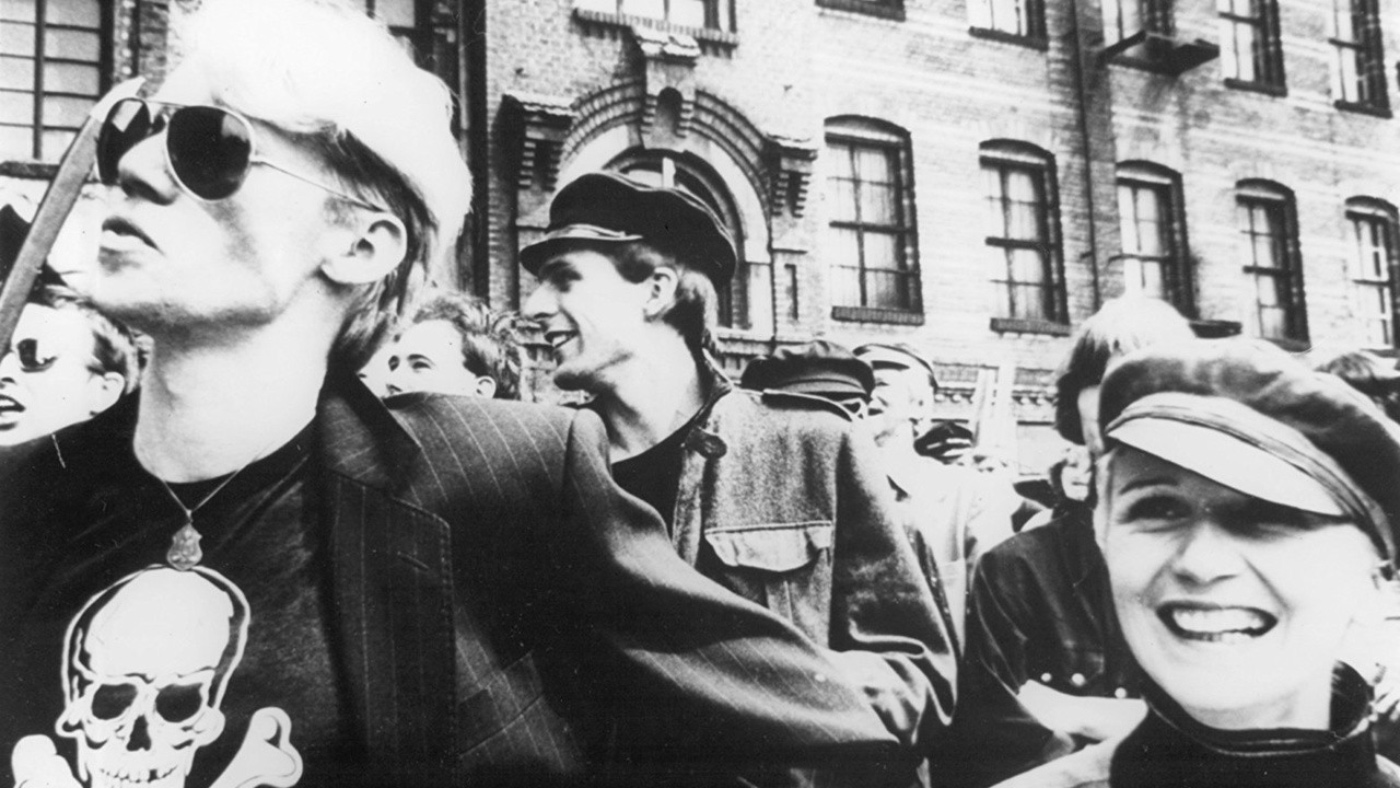
Sarkastisch trägt Annette Humpe, Frontfrau der NDW-Band Ideal ihrem Typen und Versorger im Sprechgesang ihre Anforderungen an patriarchale und auch fast transaktionale Liebesbeziehung, bevor eine Alternativ-Version des Hits »Rote Liebe« von Ideals gleichnamigen Debütalbum einsetzt.
So beginnt Rosa von Praunheims Mischung aus Literatur-Adaption (der gleichnamigen protofeministischen, revolutionären Novelle von Alexandra Kollontai) und Porträt der Künstlerin und Freie Liebe Aktivistin Helga Goetze. Damit schlägt der Film eine Brücke zwischen sexuelle Befreiungsmomenten nach der Russischen Revolution und im post-68er West-Berlin der frühen 1980er Jahre.
»Rote Liebe« ist kein Musik-Film per se. Neben Ideal trägt die experimentelle West-Berliner Band DIN A Testbild zum Soundtrack bei und deren Mitglieder Mark Eins und Gudrun Gut treten im Film auf.
Soundwatch hat diesen seltener gezeigten Film, Zeitdokument und Manifest der sexuellen Revolution ausgewählt, um Rosa von Praunheims Leben und Werk zu würdigen.
Sneeringly and sardonically, Annette Humpe, frontwoman of Neue Deutsche Welle band Ideal, recites in sprechgesang to her boyfriend and provider her demands for a patriarchal and almost transactional love relationship, before an alternative version of the hit “Rote Liebe” from Ideal’s eponymous debut album kicks in.
This is how Rosa von Praunheim’s mixture of literary adaptation (of the proto-feminist, revolutionary novella of the same name by Alexandra Kollontai) and portrait of artist and free love activist Helga Goetze begins. The film thus connects moments of sexual liberation after the Russian Revolution and in post-68 West Berlin in the early 1980s.
“ Rote Liebe” is not a music film per se. In addition to Ideal, the experimental West Berlin band DIN A Testbild contributes to the soundtrack, and its members Mark Eins and Gudrun Gut appear in the film.
Soundwatch has selected this rarely shown film, time capsule and sexual revolution manifesto to honor Rosa von Praunheim’s life and work.