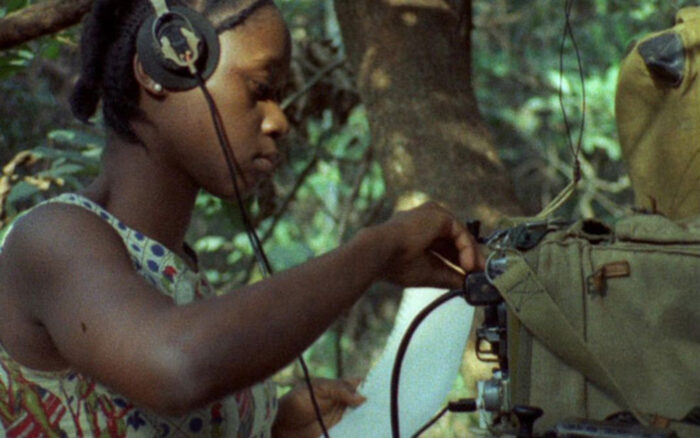
Based on Frantz Fanon’s famous book, “The Wretched of the Earth”, the film describes the uprisings that led to Africa’s decolonisation. Swedish documentarist Göran Hugo Olsson concentrates on archive material filmed in Africa by Swedish documentary filmmakers and television journalists between 1966 and 1984.
Footage of liberation movements in Angola, the Frelimo in Mozambique and the struggle for independence in Guinea-Bissau are juxtaposed with documentary images of Swedish missionaries in Tanzania and a strike in a Swedish mine in Liberia. Musician Lauryn Hill brings to life Fanon’s polarising texts which structure and provide commentary on the film’s visual material.
A glimpse of today’s smouldering conflicts along the old colonial borders shows that, even 50 years after Fanon’s death, Africa is still having to deal with the consequences of centuries of European raids and interventions.
The film presents scenes of anti-colonial armed struggle across 1960s–70s Africa, with Lauryn Hill reading Frantz Fanon’s “The Wretched of the Earth” over archival footage. The film systematically exposes colonialism’s structural violence and the necessity of armed resistance.
Göran Hugo Olsson is a Swedish director and producer best known for documentary films that use archival footage to explore social and historical themes, such as The Black Power Mixtape 1967–1975 (2011) and the 2014 documentary Concerning Violence, which is based on Frantz Fanon’s work
“Concerning Violence” is part of the Program called “Colonial/State Violence”, which also includes the shorts “The Muscles Are Tense” and “Resisting the big Settlement”. This program explores the relation between colonial and state violence in a historical and current context.